01 / Bone Growth Stimulation
Signal the body to heal faster.
A continuously wearable bone growth stimulation system built to fit into a patient's day instead of interrupting it, compact enough to clip on a belt or tuck into a pocket, with no restricted postures and no scheduled sessions. Built-in sensors and a proprietary algorithm track wear time and relative activity level automatically, combined with patient-reported pain scores in a companion app for a clear day-to-day view of recovery. Clinicians get that same picture through a remote portal that flags patients whose progress may be falling off track. Preclinical data also shows increasing bone cell proliferation the longer the device is worn each day, consistent with a dose-dependent response.
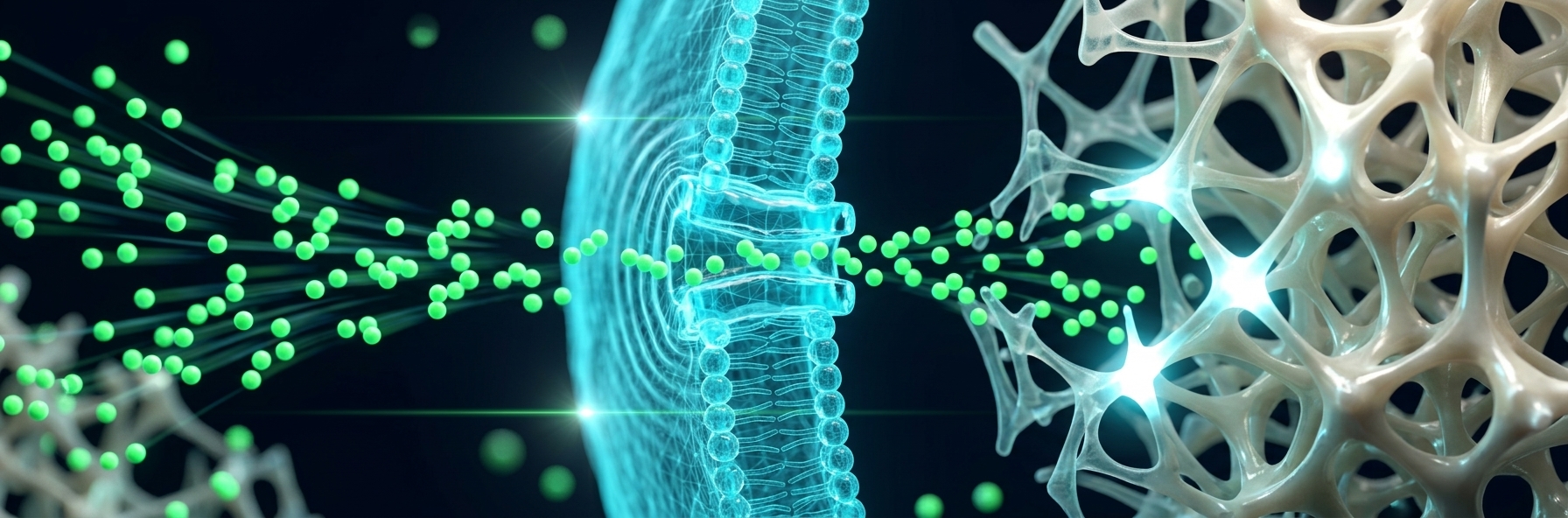
The mechanism is well characterized. Work by Brighton and colleagues established that capacitively coupled signal transduction in bone cells proceeds through voltage-gated calcium channels. Proliferation is blocked by verapamil, a calcium channel blocker, but not by inositol-phosphate inhibitors, which separates it from the inductive-coupling pathway. The resulting rise in cytosolic calcium activates calmodulin and upregulates TGF-β1 and other osteopromotive factors.
The clinical evidence supports the modality independently of any one device. A Level I systematic review and meta-analysis of randomized controlled trials (n=941) found postoperative electrical stimulation increased the odds of successful fusion 2.5-fold relative to control, with no significant subgroup interaction by stimulation type. In a randomized, double-blind, placebo-controlled trial of capacitively coupled stimulation across 28 U.S. surgical sites, 84.7% of actively stimulated patients met the combined clinical and radiographic success criteria versus 64.9% on placebo.
31%
Increase in fusion success, any fusion type
2.33x
Greater likelihood of successful outcome, Level I clinical study
56%
Reduction in failure rates
Mechanism: capacitively coupled stimulation of osteogenesis · wear-time linked dosing · Level I evidence for the modality